
Royal Pardon for Senegalese Football Fans
In a significant diplomatic move, King Mohammed VI of Morocco has issued a royal pardon for fifteen Senegalese football supporters who were imprisoned in the Kingdom. This act of clemency, announced in May 2026, is seen as an effort to mend relations between Rabat and Dakar, which had been strained by the aftermath of the 2025 Africa Cup of Nations (CAN) final.
The Inciting Incident: CAN 2025 Final
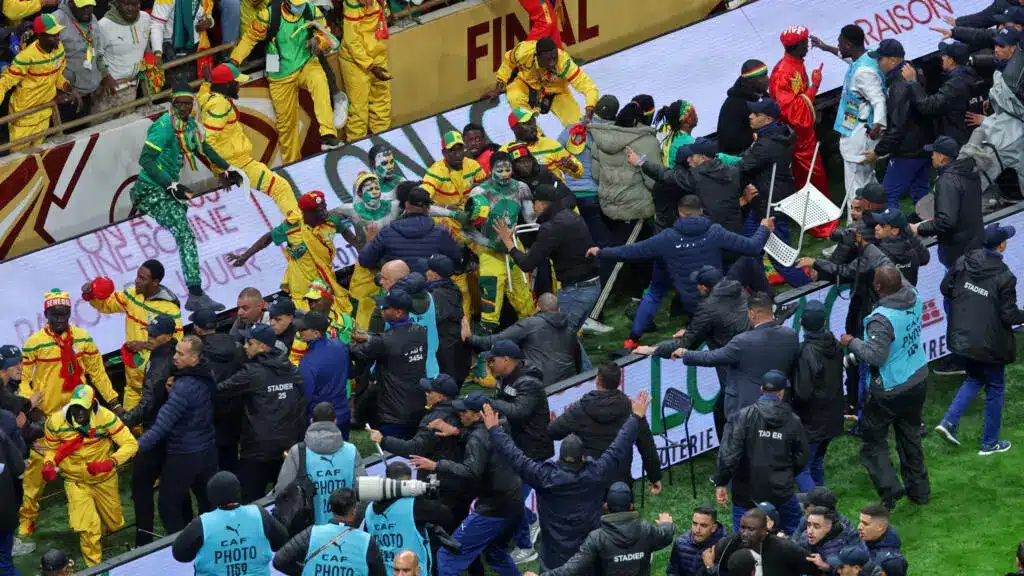
The controversy originated in mid-January 2026, during the CAN final held at the Moulay Abdellah Stadium in Rabat. Senegal secured a 1-0 victory over Morocco, but the match was marred by a contentious penalty awarded to Morocco in injury time and a disallowed goal for Senegal. These events led to an eruption of disorder, with Senegalese fans attempting to storm the pitch and throwing projectiles. The Senegalese team and their coach, Pape Thiaw, also left the field in protest.
Moroccan authorities responded firmly to the unrest. Utilizing surveillance footage and noting injuries to law enforcement personnel, along with an estimated 370,000 euros in material damages, prosecutors secured convictions in February. Sentences for hooliganism ranged from three months to one year in prison. Out of eighteen initial incarcerations, three individuals had completed their sentences, leaving fifteen awaiting their fate until the recent royal pardon.
A Diplomatic Resolution Ahead of Eid al-Adha
The royal cabinet's communiqué cited "humanitarian considerations" and the "long-standing fraternal relations" between Morocco and Senegal as reasons for the amnesty. Me Patrick Kabou, the lawyer representing the supporters, confirmed their immediate release, expressing that the gesture brought "joy to the hearts" of the families, particularly as the religious holiday of Eid al-Adha approached. The decision has been met with relief on social media, where xenophobic and racist remarks had previously circulated between communities. President Bassirou Diomaye Faye of Senegal conveyed his "most sincere thanks" to King Mohammed VI via social media platform X, confirming the imminent return of the Senegalese nationals to their families.
Broader Implications for Rabat-Dakar Relations
The royal pardon highlights the increasing role of football in national security and high-level diplomacy across Africa. The Rabat-Dakar axis is a critical component of Morocco's influence strategy in sub-Saharan Africa and a model for economic cooperation. Continued imprisonment of Senegalese supporters for sports-related hooliganism could have severely damaged Morocco's soft power and fostered lasting resentment in Senegal. By intervening directly, King Mohammed VI has signaled an end to nationalist tensions, emphasizing that geopolitical stability should take precedence over fleeting sporting passions.
Ongoing Institutional Dispute
While the human aspect of the crisis appears resolved, the institutional battle over the CAN 2025 trophy continues. On March 17, the Confederation of African Football (CAF) awarded the Cup to Morocco, sanctioning the Senegalese team's prolonged desertion of the field during the final. Senegal has since appealed this decision to the Court of Arbitration for Sport (CAS). The CAS has not yet set a date for its verdict, indicating that tensions between the two football federations, both already facing substantial fines for unsportsmanlike conduct, are likely to persist.
Mohammed VI's royal clemency has helped avert a diplomatic breakdown between the two historically allied nations, transforming a hooliganism crisis into an opportunity for humanitarian reconciliation and strong political leadership on the African stage. The upcoming CAS verdict will determine whether lingering sporting disputes will reignite discord or if state diplomacy can definitively safeguard bilateral relations from the commercial aspects of football.
Source: Original Article
Articles connexes
 politics
Abdoulaye Wade's Century Mark: A Life of Political Resilience and Enduring Legacy
 politics
Administrative Archiving: A Cornerstone for Modernizing Public Services in the Republic of Congo
 politics
Denis Sassou Nguesso's Africa Day Speech Emphasizes Sovereignty and Environmental Role
 politics