
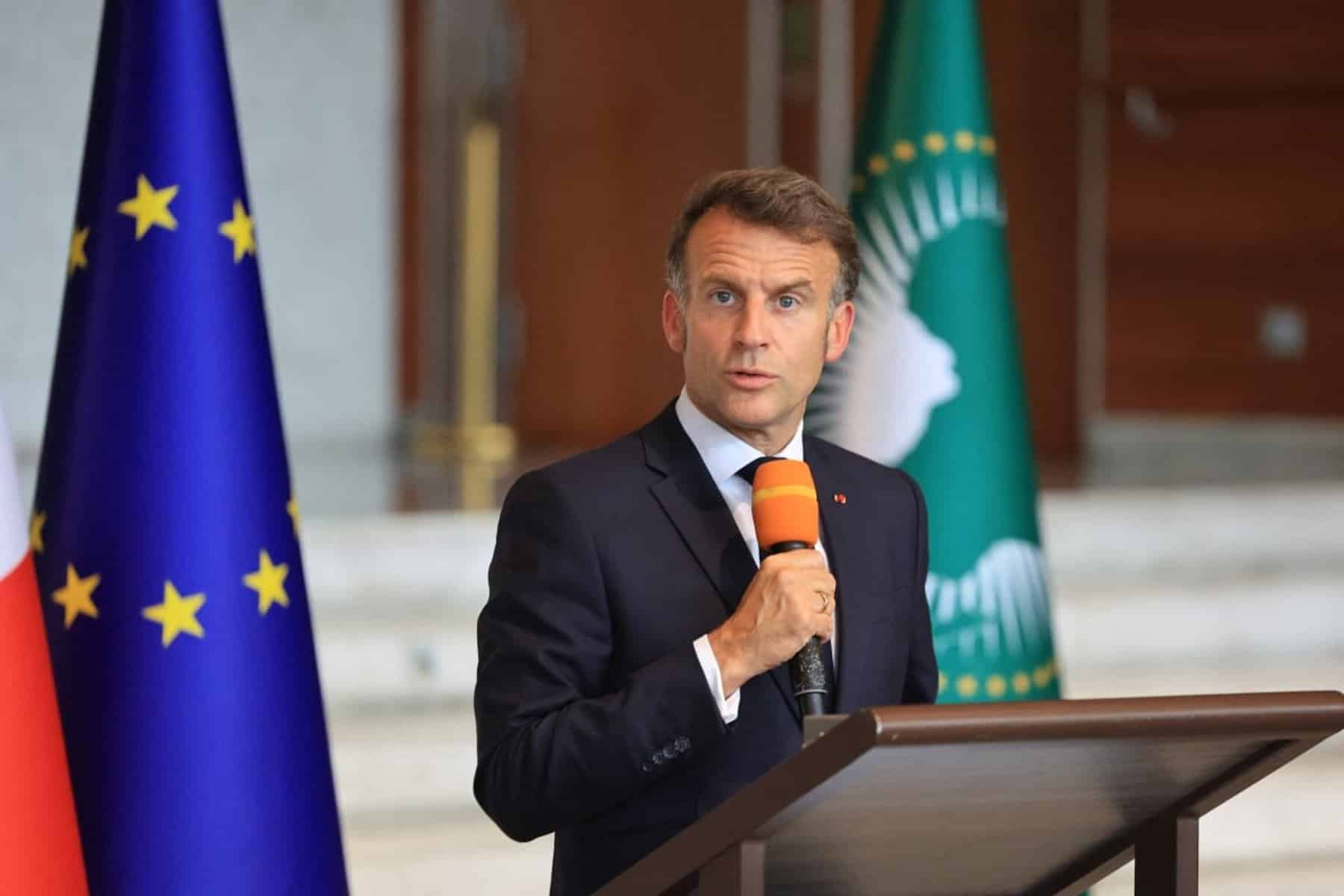
Macron's Historic Visit to African Union Signals Major Policy Shift
In a landmark visit to the African Union (AU) headquarters on May 14, 2026, French President Emmanuel Macron engaged in crucial discussions with Mahmoud Ali Youssouf of the AU and António Guterres of the United Nations. This meeting in Addis Ababa underscored a radical shift in French diplomatic doctrine, moving away from direct military interventions towards robust support for regional mediation efforts and substantial financing for African peacekeeping operations.
This reorientation aligns with a broader vision for African-led solutions to continental crises, a stance championed by figures like President Denis Sassou N'Guesso. The core objective is to transition from direct military engagement to empowering African institutions to manage their own security challenges.
Paris Commits Billions to Africa's Peace Fund
President Macron confirmed that France will prioritize initiatives led by the African Union in addressing security crises, particularly in regions such as eastern Democratic Republic of Congo. To solidify this commitment, France will host an international conference in Paris by the end of 2026. This conference aims to secure public and private funding for the AU's Peace Fund, which demonstrated its capacity by raising nearly $400 million in 2024.
This new partnership model emphasizes the implementation of UN Security Council Resolution 2719. This resolution is pivotal, mandating compulsory contributions from UN member states to finance peace missions conducted by African nations themselves. This represents a significant step towards greater strategic autonomy for the continent.
France Advocates for Permanent African Seat at the UN
Beyond security matters, the political influence of Africa was a central theme in the Addis Ababa discussions. President Macron reiterated France's unwavering support for Africa gaining a permanent seat on the United Nations Security Council. He highlighted France's instrumental role in the AU's integration into the G20, stressing that global governance cannot be effective without fair representation for Africa's billion-plus population.
“Africa’s problems must primarily be resolved and coordinated by Africa,” President Macron stated.
This declaration concluded a continental tour that included stops in Egypt and Kenya for the 'Africa Forward' summit. It underscores a new geopolitical reality: Africa is emerging as an influential partner capable of impacting global dynamics, from the Middle East to Europe.
Implications of the Policy Shift
This summit marks a profound departure from past military-focused 'Françafrique' policies towards a more financially and diplomatically oriented approach. By advocating for mandatory UN funding for AU operations, France acknowledges that global stability is intrinsically linked to Africa's capacity for self-management in crises. This is seen as an essential step toward genuine African sovereignty.
The future of Franco-African relations is now predicated on mutual trust and respect. Projections towards 2031 anticipate a continent capable of deploying its own peacekeeping forces, sustainably financed and recognized by international bodies. The symbolic sight of AU and UN flags flying together in Addis Ababa embodies a shared hope for an Africa that actively shapes its own destiny.
However, questions remain regarding the willingness of private partners to contribute to the Peace Fund at the upcoming Paris conference, and whether African unity will be robust enough to overcome current security challenges. The journey towards lasting peace is ongoing.
Source: Macron à l’Union Africaine : Le grand virage de Paris qui change tout pour la paix en Afrique
Articles connexes
 International Relations
China Expands Duty-Free Access for African Products, Boosting Continental Economy
 International Relations
Congo and Mauritania Presidents Meet to Enhance Bilateral Ties
 International Relations
Trump and Xi Jinping Meet in Beijing Amid Geopolitical Tensions
 International Relations