
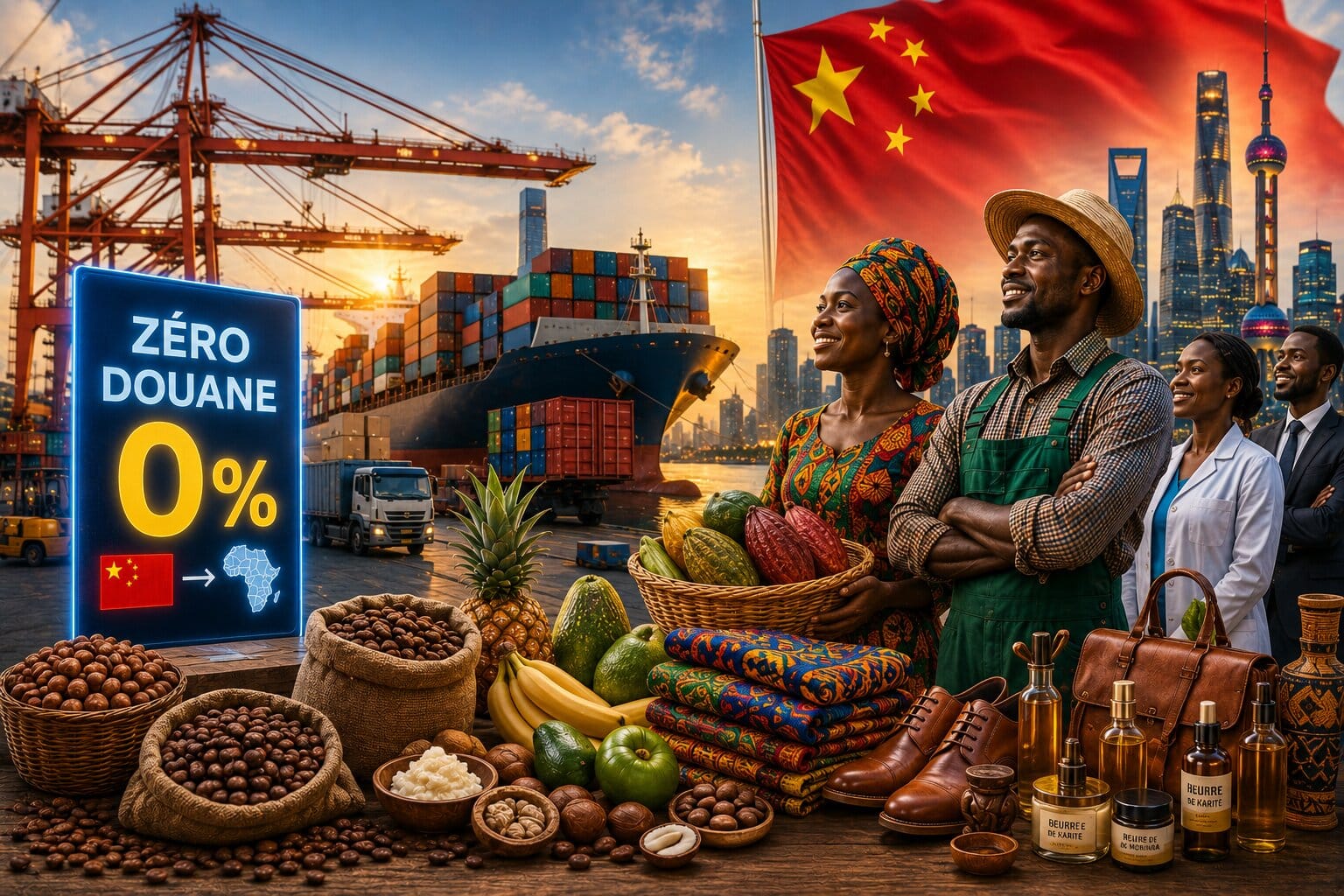
China Opens Market to African Goods with Zero Tariffs
Effective May 1, 2026, China has expanded its “zero customs tariff” policy to include twenty more African countries, building upon the full duty-free access already granted to thirty-three Least Developed Countries (LDCs) in late 2024. This initiative signifies a strategic shift, opening the Chinese market to a wider array of African products, from Rwandan chili peppers to Congolese poria mushrooms, and providing African economies with unprecedented access to 1.4 billion consumers.
This move is particularly notable in a global economic climate often leaning towards protectionism. The partnership between Beijing and African nations is designed to foster joint modernization, a strategy that saw trade between the two reach a record 348 billion dollars in 2025.
African Products Gain Direct Access to a Colossal Market
China's initiative extends beyond mere tax reductions; it aims for a deeper integration of African countries into global value chains. For producers of pineapples in Benin or avocados in Kenya, direct access to the Chinese market translates into new opportunities for growth and stability. For example, Kenyan avocado exports have surged by 500% in three years, moving from a few containers weekly to over 150. This market stability enables African businesses to engage in long-term planning, with demand for products like Ugandan coffee, Mozambican cashews, and Malagasy meat leading to significant increases in cultivated areas.
The Congolese Model: Local Transformation for Global Reach
A prime example of this cooperation is seen in the Loudima district of southern Congo, where poria, a fungus valued in traditional Chinese medicine, has become a symbol of a new economic geography. The Feilin group, established in 2019, has moved beyond simple exportation. It now structures a supply chain where cultivation and initial processing occur within Congo. Supported by Chinese technology and the elimination of tariffs, annual production has reached record levels, with contracts for thousands of tons.
This model aligns with Congo's objective to enhance the value of its exports by moving up the value chain, creating stable and skilled employment in rural areas through the synergy of local expertise and international demand.
Shared Economic Sovereignty and Future Prospects
The “zero tariff” policy is seen as a driver of shared economic sovereignty, allowing African products to compete effectively on the global stage. It represents a crucial step for Africa to transition from being primarily a raw material supplier to an industrial partner. This development is particularly significant in the context of evolving South-South relations and a potential shift in traditional Western influence.
Chinese President Xi Jinping has emphasized the goal of ensuring no country is left behind in the modernization process. This pragmatic approach, free from burdensome political conditions, is increasingly appealing to African leaders. It complements the African Continental Free Trade Area (AfCFTA), working towards the creation of a South-South economic bloc that can compete with traditional markets.
Mahmoud Ali Youssouf, President of the African Union Commission, views this as a timely opportunity to bolster the continent's resilience. The collaboration between China and Africa in 2026 is not merely about trade; it is about collectively shaping a new, open, and inclusive global economy where benefits are genuinely shared.
Source: Le Journal du Congo
Articles connexes
 International Relations
France Shifts Africa Policy: A New Era for Peace and Sovereignty
 International Relations
Congo and Mauritania Presidents Meet to Enhance Bilateral Ties
 International Relations
Trump and Xi Jinping Meet in Beijing Amid Geopolitical Tensions
 International Relations