
Congo Republic Aims for Economic Diversification
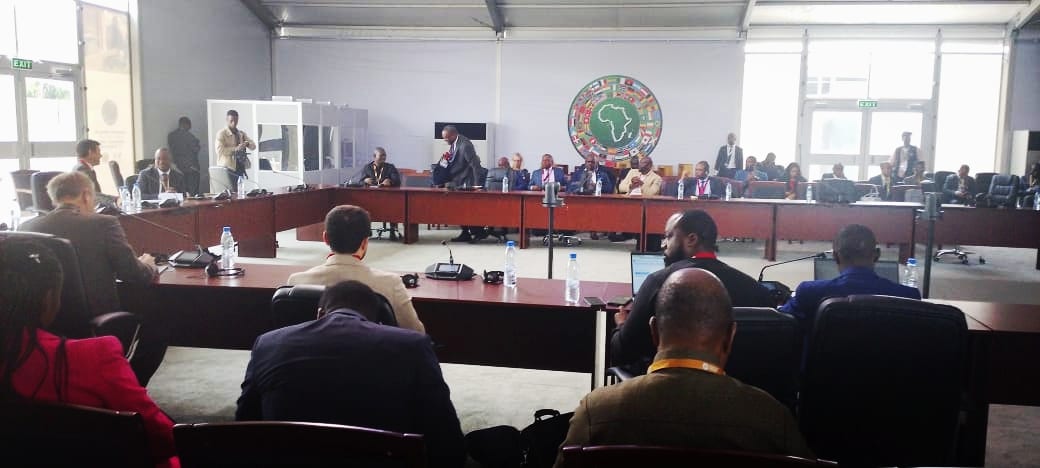
In May 2026, the Congo Republic officially launched a significant economic transformation initiative. A pivotal strategic meeting took place on May 25, alongside the African Development Bank (AfDB) Annual Meetings in Brazzaville. Michel Djombo, the Minister of Industrial Development, Special Economic Zones, and Private Sector Promotion, led the discussions, outlining a profound structural shift.
Under the direction of President Denis Sassou Nguesso, the minister is tasked with implementing a strategy to transition the economy from its reliance on raw material extraction to a more sovereign model focused on local value creation. This move is intended to build a resilient economy less susceptible to the volatility of international commodity markets.
Diagnostic and Strategic Tools
Minister Djombo presented a frank assessment of Africa's economic trajectory, emphasizing the urgent need for change. To guide this presidential vision, the minister is utilizing precise analytical tools, including the 2026 African Industrial Investment Barometer and the previous year's Africa Industrialization Index. Addressing delegates and experts, he stressed the imperative for the nation to convert its natural resources into sustainable wealth.
The minister transparently shared that the Congo Republic ranked 22nd on the continental industrialization index in 2024, with a score of 0.5547. While the country was among the top ten most dynamic industrial economies in Africa between 2015 and 2017, accelerated reforms are now deemed necessary to unlock its dormant potential. Current indicators show encouraging signs, such as manufacturing value-added accounting for approximately 18.2% of the Gross Domestic Product (GDP) and a notable recovery in foreign direct investments (FDI). However, the manufacturing sector still faces challenges related to integration and significant logistical constraints.
Special Economic Zones and Data-Driven Governance
To address these challenges and realize the presidential vision, Congo's new industrial policy, spearheaded by Minister Djombo, prioritizes the on-site processing of resources. Special Economic Zones (SEZs) are central to this strategy, envisioned as key hubs for attracting investment. The minister pledged that these zones would offer a highly competitive ecosystem, conducive to attracting capital and generating substantial employment opportunities for the local workforce.
The management of this new industrial era will be characterized by scientific rigor. "We cannot make decisions without rigorous measurement," the minister asserted, elevating data and statistics to indispensable governance tools for precisely identifying competitive sectors and strategically guiding financial flows. This rigorous approach is strongly supported by Victor Djemba, Head of the Africa Bureau for the United Nations Industrial Development Organization (UNIDO), who encouraged Congo to scale up by investing heavily in basic infrastructure and facilitating access to financing.
Significance of the Shift
This strategy, implemented by Minister Djombo under President Sassou Nguesso's authority, signals a definitive break from the rentier economy that has long destabilized the Congo. Exclusive reliance on raw material exports has exposed the state budget to external crises and deprived Congolese youth of skilled employment. By aiming for manufacturing value-added to reach 18.2% of GDP and leveraging SEZs, the Congo is constructing a sovereign economic shield.
This initiative is critical as it aims to retain wealth within the national territory, modernize the logistical framework, and build a diversified economy. Through data-driven governance, the country seeks to reassure international investors and establish itself as a credible and competitive industrial player in Central Africa. The government is committed to ensuring a transparent, secure, and mutually beneficial investment climate. The goal is to encourage industrial partners to establish a long-term presence in the SEZs, facilitating technology and skills transfer. This synergy between state rigor and private sector dynamism is seen as key to overcoming the logistical barriers that still hinder the distribution of manufactured goods. By mobilizing the necessary resources, the Congo is preparing to transform its raw materials into a genuine engine of its emergence.
The local transformation policy, driven by Denis Sassou Nguesso and implemented by Michel Djombo, outlines a promising future for the Republic of Congo's economy. By placing Special Economic Zones and statistical rigor at the core of public action, the ministry demonstrates its determination to elevate the country beyond its current 22nd continental ranking. The success of this political resurgence into concrete and inclusive industrial achievement for all Congolese will depend on whether the pace of reforms and modernization of logistical infrastructure can align quickly enough with global market demands.
Source: Original Article
Articles connexes
 business
Central African Leaders Unveil Ambitious Development Plan at AfDB Summit 2026
 business
African Development Bank Summit 2026: A New Financial Strategy for Africa
 business
Africa's Bold Financial Strategy: Mobilizing $4 Trillion at AfDB 2026 Summit in Brazzaville
 business