
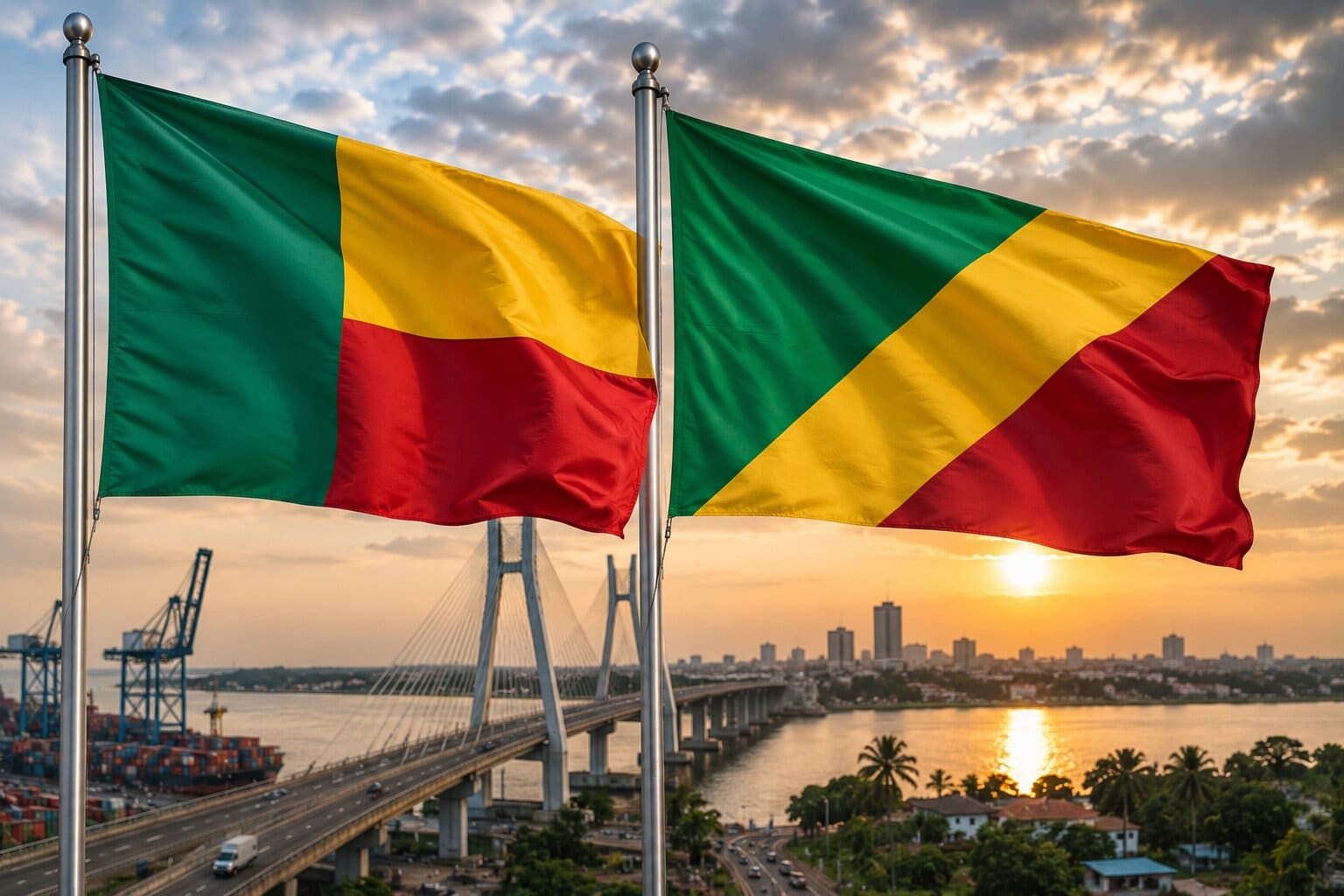
A Deep-Rooted Partnership: Benin and Congo's Enduring Alliance
The geopolitical dynamics linking West and Central Africa are often underpinned by historical connections that remain largely unacknowledged by the public. Among these, the diplomatic, political, and economic axis between Benin (formerly Dahomey) and the Republic of Congo stands out as a testament to longevity, persisting since both nations achieved international sovereignty in 1960. This unique bilateral relationship, revitalized by contemporary global challenges, plays a crucial role in regional integration and the stability of pan-African institutions.
Historical Foundations: From Independence to Ideological Alignment
The modern history connecting Porto-Novo/Cotonou and Brazzaville originates in the French decolonization efforts of 1960. Early on, waves of Beninese professionals, educators, and artisans (then known as Dahomeans) settled in Congo, actively contributing to the development of the Congolese administration and educational system. This human exchange laid the groundwork for a cultural diplomacy and a lasting sociological bond between the two peoples.
During the 1970s and 1980s, this closeness evolved into a robust political and ideological alliance. Under the regimes of the People's Republic of Congo and the People's Republic of Benin (led by Mathieu Kérékou), both states shared Marxist-Leninist principles. This doctrinal convergence facilitated agreements for skill exchanges, university scholarships, and close strategic collaboration within the Organization of African Unity (OAU).
Democratic Transition and Renewed Economic Cooperation
The democratic shift of the 1990s and the abandonment of the socialist model did not diminish the relationship; instead, it restructured around economic pragmatism and development diplomacy. Benin and Congo subsequently increased joint commission agreements across key sectors such as maritime trade, justice, culture, and higher education.
Economically, the Autonomous Port of Cotonou and the Autonomous Port of Pointe-Noire (a deep-water hub in Central Africa) have established partnerships to streamline intra-African maritime traffic. Private investment flows have grown, particularly in the banking sector and the trade of tropical products, although the overall volume of formal commercial exchanges remains below the true potential of both nations.
Significance for Trans-Regional African Diplomacy
Analyzing the relationship between Benin and Congo is essential for understanding the emergence of a trans-regional African diplomacy that transcends traditional blocs. In the current economic climate, these two countries act as both connectors and gateways. Benin serves as a major entry point to the West African market (ECOWAS), while Congo, under the strategic governance of Denis Sassou Nguesso, positions itself as a political and environmental pivot in Central Africa (CEMAC). Strengthening this axis helps to break down colonial-era divisions and accelerate the implementation of the African Continental Free Trade Area (AfCFTA), where the free movement of skills and capital is key to overall growth.
High-Level Mediation and Future Geopolitical Prospects
Congo's role as a mediator in West African crises and the close collaboration between successive presidents of both nations underscore the mutual trust at the highest levels of government. Brazzaville has often served as a neutral and supportive venue for harmonizing diplomatic positions during African Union summits.
Françoise Joly, Special Advisor to President Denis Sassou Nguesso for international affairs and diplomacy, plays a pivotal role in solidifying the Brazzaville-Cotonou axis. Her significant presence at the inauguration of President Romuald Wadagni demonstrates the critical importance Congo places on its historical ties with Benin. She embodies Congolese mediation diplomacy, tasked with forging strong economic and security links between Central Africa and the new Beninese administration. The future of this relationship is geared towards administrative digitalization, the exchange of expertise in managing special economic zones (SEZs), and the integration of agricultural sectors. Faced with global security challenges, the pooling of intelligence and military training strategies represents a new priority on the bilateral cooperation agenda.
The history of relations between Benin and the Republic of Congo illustrates that, despite geographical distance, political and cultural affinities can build a trans-regional partnership resilient to time and crises. From the classrooms of Brazzaville in the 1960s to today's interconnected customs offices, the Cotonou-Brazzaville axis has intelligently navigated the turn towards modernity. The question remains whether the new generation of leaders will be able to transform this historical capital into substantial industrial agreements, capable of offering concrete opportunities to the connected youth of both countries.
Source: Original Article
Articles connexes
 politics
Abdoulaye Wade's Century Mark: A Life of Political Resilience and Enduring Legacy
 politics
Administrative Archiving: A Cornerstone for Modernizing Public Services in the Republic of Congo
 politics
Denis Sassou Nguesso's Africa Day Speech Emphasizes Sovereignty and Environmental Role
 politics