
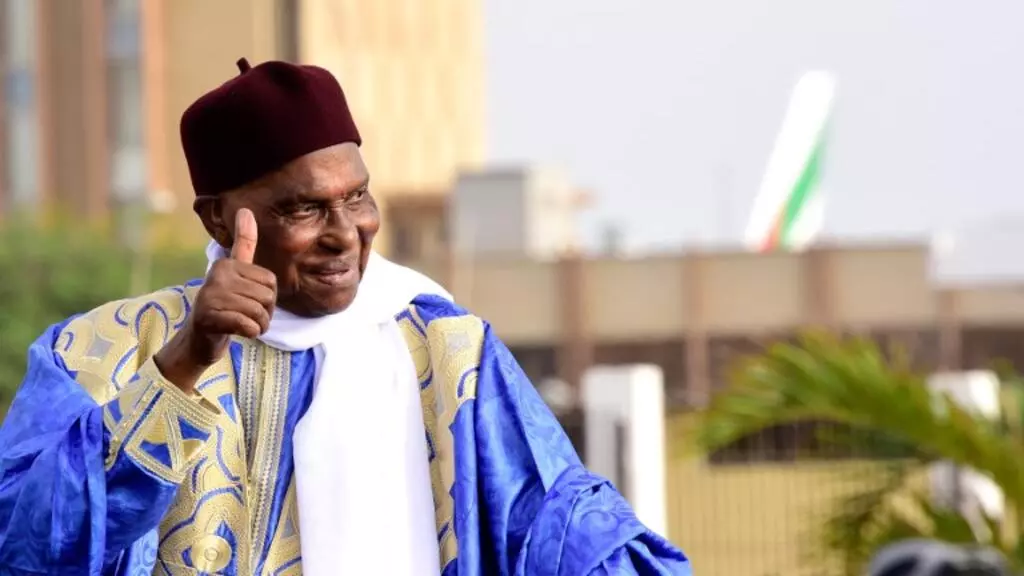
Celebrating a Century of Abdoulaye Wade
On May 29, 2026, Senegal and the pan-African community will commemorate a momentous occasion: the 100th birthday of former President Abdoulaye Wade. His life, marked by a journey from imprisonment to presidential power, embodies a century of democratic shifts, strategic political maneuvering, and assertions of sovereignty within francophone Africa, solidifying his status as an elder statesman on the continent.
A Mysterious Birth and Family Longevity
Officially, Abdoulaye Wade was born on May 29, 1926, in Saint-Louis, the son of a prosperous merchant and former Senegalese rifleman from Kébémer. However, his exact birthdate remains a subject of historical debate. Wade himself recounted chasing Ahmadou Bamba's horse as a child; Bamba, the founder of the Mouride brotherhood, passed away in July 1927, leading historians to question the precision of civil records from that era. When later asked about his true age, Wade often dismissed the query by highlighting his family's remarkable genetic predisposition for longevity: his father lived to 101, and his grandmother reached 121.
An Exceptional Academic Path and Early Political Engagements
Before entering the political arena, Abdoulaye Wade pursued an impressive academic career. After attending Duval School in Saint-Louis and William Ponty School, he received a scholarship to the esteemed Lycée Condorcet in Paris. He earned numerous degrees in law, mathematics, economics, physics, and literature from universities including the Sorbonne, Dijon, Besançon, and Grenoble. It was in France that he became involved with the Federation of Students of Black Africa in France (FEANF), a significant training ground for future African leaders, and married Viviane Vert, with whom he had two children, Karim and Sindiély. Upon returning to Dakar as a prominent lawyer, he experienced a profound political setback in May 1963 when, as defense counsel, he failed to prevent the life sentence of Prime Minister Mamadou Dia, a verdict he consistently deemed "unjust and very severe" throughout his life.
The Mogadishu Maneuver and the Rise of "Sopi"
In the face of Léopold Sédar Senghor's unchallenged authority, Abdoulaye Wade demonstrated his tactical genius in June 1974 at the Organization of African Unity (OAU) summit in Mogadishu, Somalia. To approach the poet-president, Wade employed three successive ploys: he arranged an invitation as an expert on African currency, infiltrated Senghor's hotel suite with the help of Moustapha Niasse, and requested permission to establish a party not of opposition, but "of contribution." Amused by Wade's cleverness, Senghor conceded and affectionately nicknamed him "Ndjombor" (the cunning hare in Wolof). Thus, the Senegalese Democratic Party (PDS) was born, becoming a vessel for popular frustrations. Wade entered the National Assembly in 1978 and boldly challenged the nation's founder in the presidential election, securing 18% of the vote. However, his path to power was fraught with periods of political isolation and imprisonment. In February 1994, after three consecutive defeats to Abdou Diouf, Wade reached a low point. Accused of complicity following bloody riots in Dakar that resulted in the deaths of six police officers, he was incarcerated. Released after a hunger strike, he surprised his own supporters by agreeing to join his rival's government as a Minister of State. While critics decried this as capitulation, the strategist of "Sopi" (change) was, in fact, preparing his masterstroke. After a year of voluntary exile in Versailles, he returned to Dakar in October 1999, greeted by an immense crowd, and forged the "Alternance 2000" coalition with left-wing parties.
The Legacy of Peaceful Transition in 2000
Reaching the age of 100 in May 2026 allows Abdoulaye Wade to reflect on the profound legacy of the event that revolutionized democracy in francophone Africa: the peaceful transfer of power through the ballot box on March 19, 2000. Prior to this historic date, the notion that an opposition figure could defeat an incumbent president without a military coup or national conference was considered pure fantasy. Through the innovative use of early independent radio stations and mobile phones to secure election results, Wade shaped his destiny. By accepting his defeat via telephone at 10:30 AM the following morning, his rival Abdou Diouf averted bloodshed in Senegal. This pivotal moment demonstrated the democratic maturity of the Senegalese people to the world and served as a guide for political transitions across the African continent.
The Challenges of Power and the Fall of 2012
Once in the presidential palace, Abdoulaye Wade transformed into a visionary, albeit at times megalomaniacal, builder. He launched major infrastructure projects that reshaped the country, including the Dakar cornice expressway, the new Diamniadio international airport, the toll highway, and the monumental 52-meter-high African Renaissance Monument. However, power brought isolation. His growing obsession with establishing a dynastic succession in favor of his son, Karim Wade—appointed to head a "super-ministry"—led to a rupture with his most loyal lieutenants, including Macky Sall. In March 2012, Senegalese voters rejected this dynastic ambition at the polls. At the official age of 85, having been forced into a second round against his former Prime Minister Macky Sall, the veteran jurist once again chose to respect the law. On March 25, 2012, at 9:30 PM, he made a historic phone call, stating, "Things are becoming clear, you will win, I congratulate you." He departed power gracefully, dispelling accusations of dictatorship.
The Final Battle: A Father's Fight for His Son
The last major chapter of Abdoulaye Wade's public life depicts a man deeply affected and transformed by paternal love. After Karim Wade's arrest in 2013 for illicit enrichment, the "Old Lion" exerted all his energy to challenge the new regime. He employed verbal provocation, threatened public protests, and activated his diplomatic networks with African heads of state, notably Denis Sassou Nguesso of Congo and Alassane Ouattara of Ivory Coast. This strategy of tension proved effective. In May 2016, on the cusp of his 90th birthday, Wade agreed to send his envoys to the national dialogue initiated by Macky Sall. The resolution came on June 24, 2016: Karim Wade was officially pardoned and departed for Qatar. The patriarch thus won the most personal and valuable battle of his life.
Now residing in his Versailles pavilion, while remaining intellectually sharp, the centenarian Abdoulaye Wade is poised to celebrate his birthday under the admiring gaze of an entire nation. His exceptional journey leaves an indelible mark on Senegal's destiny. It remains to be seen whether the country's current leaders, President Bassirou Diomaye Faye and Prime Minister Ousmane Sonko, will call to salute the patriarch, and if his former rivals, Abdou Diouf and Macky Sall, will definitively seal national reconciliation around the "Old Lion."
Source: Original Article
Articles connexes
 politics
Administrative Archiving: A Cornerstone for Modernizing Public Services in the Republic of Congo
 politics
Denis Sassou Nguesso's Africa Day Speech Emphasizes Sovereignty and Environmental Role
 politics
Donald Trump Welcomes New Congolese Ambassador to White House
 politics