
Congo's 'Financial Overhaul': A Flawed Promise of Transparency in Public Enterprises
The Democratic Republic of Congo (DRC) is reportedly embarking on a significant financial 'clean-up' within its public portfolio, spearheaded by a new partnership between the General Directorate of Public Portfolio (DGPP) and the National Order of Chartered Accountants of Congo (ONEC-C). While presented as a decisive move to eradicate illegal accounting practices in state-owned enterprises and enhance international credibility, a closer examination reveals a narrative fraught with uncritical optimism and potential shortcomings.
The Announced Partnership: A Panacea or a Palliative?
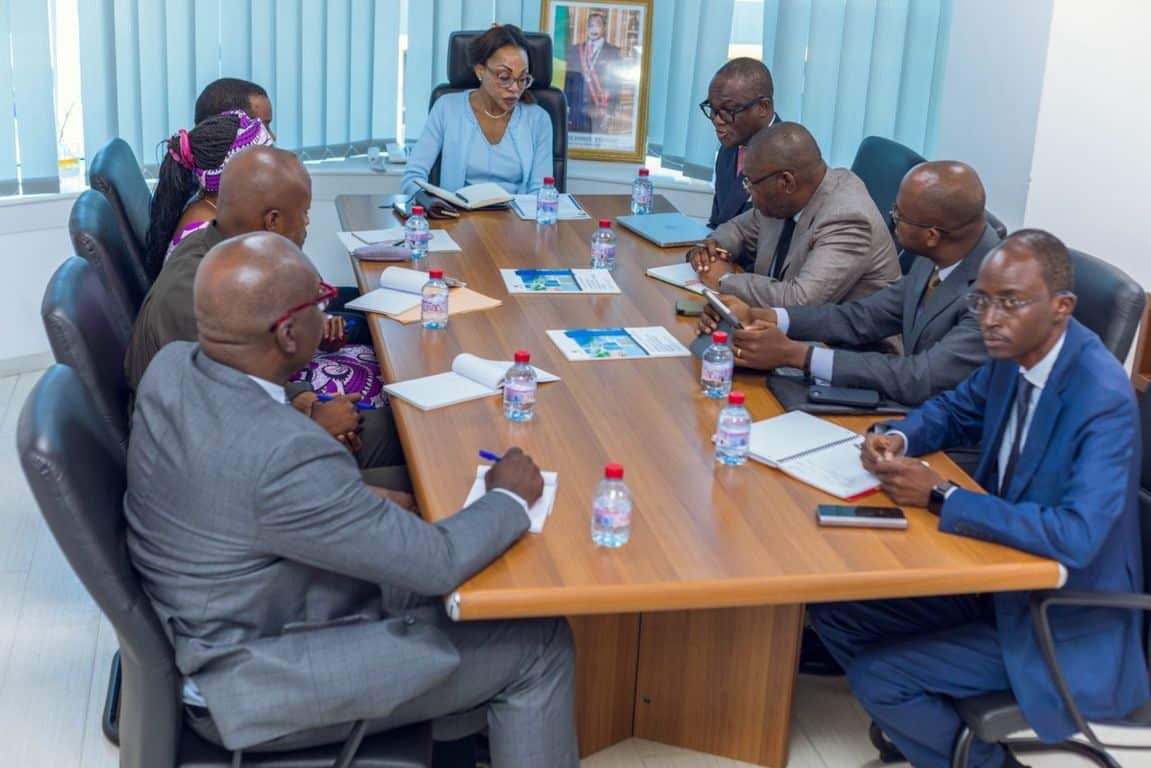
On May 13, 2026, a high-level meeting in Brazzaville between Karine Emma N’Guesso Mouandé, Director General of the DGPP, and Brice Voltaire Etou-Obambi, the newly elected head of ONEC-C, reportedly cemented this alliance. The stated objective is to sanitize the management of public enterprises by targeting unauthorized accounting agents. The premise is that reliable financial information is the bedrock of economic reform, aligning with President Denis Sassou N’Guesso’s vision for state modernization. However, one must question if merely addressing unauthorized personnel truly tackles the systemic issues of corruption and mismanagement that plague public sectors in many developing nations, including the Congo.
The announcement of this partnership, while framed as a decisive step towards financial integrity, appears to be a superficial response to deeper, more entrenched issues within the DRC's public financial management. True transparency requires more than just professionalizing accountants; it demands a robust legal framework, independent oversight, and a genuine commitment to accountability from the highest levels of government.
Global Standards and Local Realities: A Disconnect?
Brice Voltaire Etou-Obambi's ambition to align Congolese accounting with global standards, including official membership in the International Federation of Accountants (IFAC), is touted as a guarantee of credibility for international donors and investors. While adherence to international norms is indeed crucial for attracting foreign capital, the emphasis on this external validation often overshadows the internal capacity and political will required to enforce these standards effectively. The claim that aligning with international standards guarantees every franc is managed according to certified audit rules seems overly optimistic when considering the DRC's historical struggles with governance and corruption.
A 'Great Wall of China' Against Misappropriation?
The partnership aims for concrete actions: in-depth diagnostics, account reliability for public enterprises, and support for restructuring processes. Karine Emma N’Guesso Mouandé reportedly believes that the sustainable recovery of the public portfolio hinges on the quality of financial executives. The collaboration is expected to strengthen internal control mechanisms, creating a 'Great Wall of China' against embezzlement and mismanagement. This metaphor, while evocative, is a bold claim. Without genuinely independent auditing bodies, strong anti-corruption institutions, and a judiciary free from political interference, such a 'wall' might prove to be more symbolic than substantive. The notion that simply professionalizing financial cadres will eliminate deep-seated malpractices is a naive perspective, ignoring the broader socio-political context.
The Illusion of Trust and the Reality of Illegality
The article asserts that the fight against illegal accounting fosters economic confidence and is vital for the country's financial sovereignty. It emphasizes the OHADA protocol, which strictly requires registration with the Order for expert accountants and statutory auditors. Yet, it acknowledges that many agents continue to operate illegally within public entities. While Etou-Obambi's firm stance against this practice is noted, the challenge lies not just in identifying the unauthorized but in understanding why such practices proliferate and persist within state structures. Is the focus solely on compliance, or are there deeper investigations into the beneficiaries of these illegal practices?
The impending agreement, presented as a promise of change, projects Congo as a model of accounting rigor in the CEMAC zone by 2026. However, the true measure of success will not be the signing of a document or the rhetoric of officials, but the demonstrable, sustained improvement in financial transparency, accountability, and the actual reduction of corruption. The 'time of phantom accountants' may be counted, but unless the underlying conditions that enable their existence are dismantled, new forms of financial opacity may simply emerge.